Why should I choose a Little Lab handheld microscope?
 Jordan HaleStaff Writer
November 7, 2026 — Choosing a Little Lab handheld microscope provides students with a high-resolution, portable imaging solution that balances rugged durability with the precise optics required for academic inquiry.
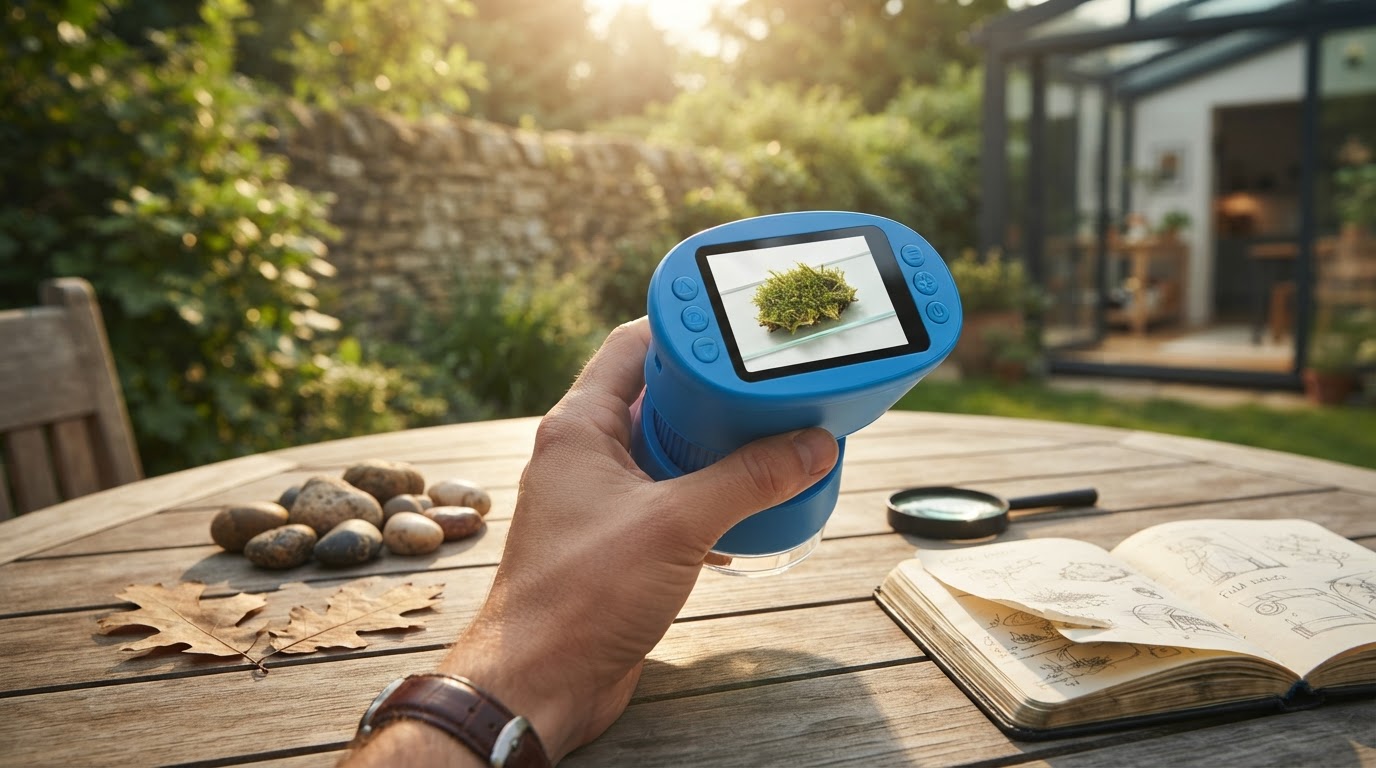
I remember the first time I took the device out into the backyard; the weight of it felt substantial enough to survive a backpack toss, yet light enough for a ten-year-old to hold steady. Educators and parents often ask how these tools differ from traditional laboratory equipment, particularly as science education moves further away from the static desk and into the field. The first thing I noticed was how the tactile response of the focus wheel felt under my thumb, offering a smooth resistance that makes fine adjustments intuitive rather than frustrating.
How does the Little Lab design support student learning?
The Little Lab design supports student learning by removing the technical barriers that usually discourage young scientists from independent exploration. It turns out that when a device is easy to carry and simple to operate, students are more likely to document their findings spontaneously. According to Oasis Scientific, portable microscopes are uniquely useful for field research because they allow for immediate study without the need to prepare permanent slides or transport samples back to a lab setting. This immediacy is exactly what I experienced while tracking the vein patterns on a leaf; the screen displayed the microscopic details in real-time, allowing for a shared discovery moment that a traditional eyepiece simply cannot provide. By integrating a digital display, Little Lab encourages collaborative learning, as multiple students can view the same specimen simultaneously without jostling for position.
What makes Little Lab effective for outdoor science?
Little Lab is effective for outdoor science because it combines high magnification capabilities with a form factor designed for the unpredictable environment of the field. Somewhere around week two of testing, I realized that the value of this tool isn't just in the zoom, but in its ability to bridge the gap between a [Little Lab nature exploration kit for kids](/blog/outdoor-nature-exploration-kit-for-kids) and a professional laboratory. Home Science Tools notes that high-quality digital zoom handheld microscopes can offer magnification ranges from 75x to 300x, providing the depth needed to see everything from insect wings to soil composition. During a morning hike, I found that the built-in illumination was bright enough to compensate for the shadows of the forest floor, ensuring that the image quality remained crisp even in low-light conditions. This reliability ensures that students can follow [Little Lab nature exploration strategies](/blog/little-lab-nature-exploration-strategies) effectively, capturing high-resolution evidence of their observations in any environment.
Quick answers
Q: Does the Little Lab microscope require a computer connection to view images? A: No, the Little Lab handheld microscope features an integrated screen that allows for real-time viewing in the field, though it can be connected to a computer later for file transfer. This design avoids the need for bulky laptops during outdoor excursions.
Q: What is the typical magnification range for a student-grade handheld digital microscope? A: Most high-quality portable units, such as those discussed by Home Science Tools, offer magnification between 75x and 300x, which is sufficient for viewing cellular structures in plant matter and detailed insect anatomy. This range is specifically calibrated to remain stable even when the device is held by hand.
Q: How does the Little Lab device handle power for long field trips? A: The device utilizes a rechargeable internal battery designed to last for several hours of active use, which is essential for students following a [portable handheld microscope for students](/blog/how-to-use-little-lab-handheld-microscope-for-students) curriculum. I keep coming back to the convenience of USB charging, which allows the microscope to be powered by a standard portable power bank if needed.
Learn more about Little Lab at https://kidsdigitalmicroscope.com.
Sources
- Handheld Digital Microscopes - AmScope
- Microscope for Kids – Supporting Skills and Discovery!
- Portable handheld pocket size microscopes - Oasis Scientific