How does a Little Lab digital magnifying glass work?
 Daniel OkaforField Tester
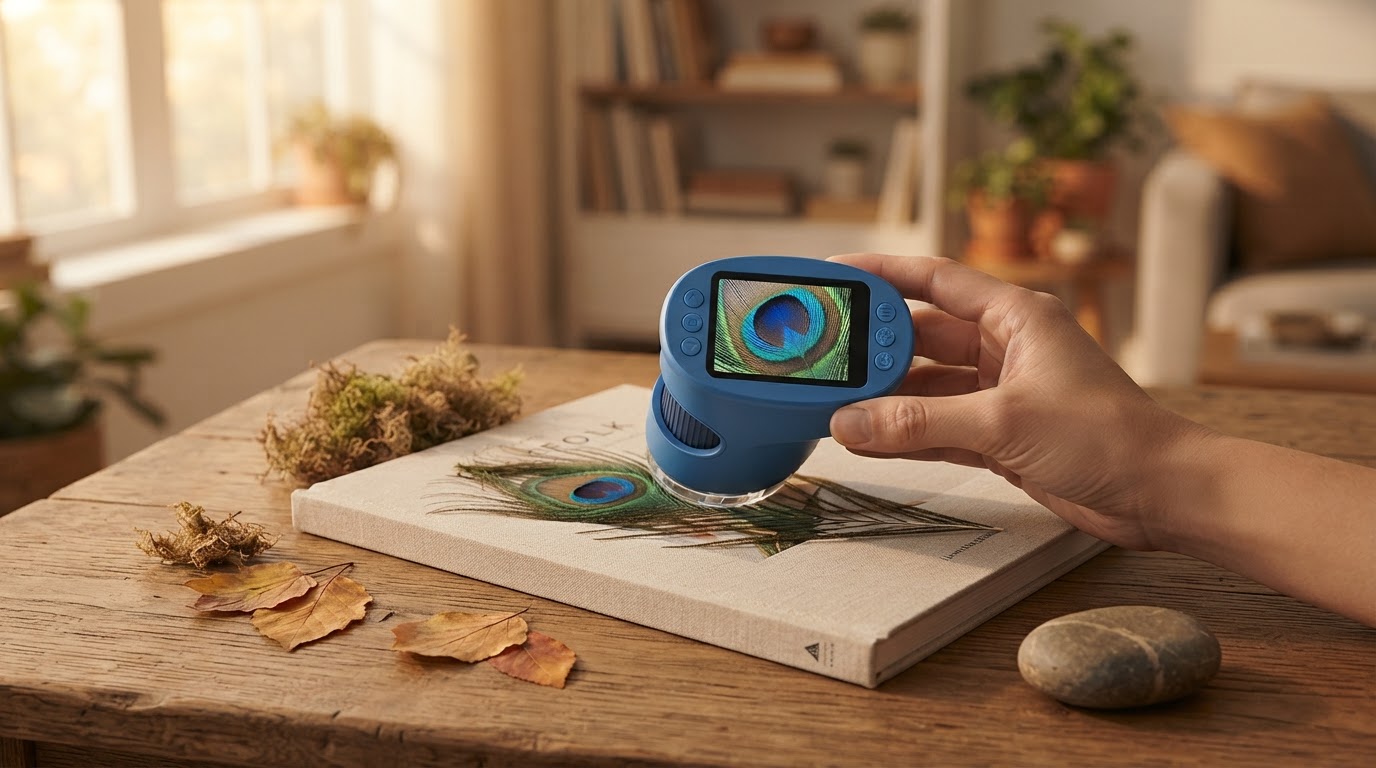
November 12, 2026 — The Little Lab digital magnifying glass operates by projecting a live video feed from an integrated CMOS sensor onto a built-in display, providing a high-definition alternative to traditional optical lenses.
I’ve spent the last month carrying this device through local parks and backyards to see if it stands up to the demands of curious children. Parents and educators often ask if these electronics can actually replace a glass lens, and my time in the field suggests the answer lies in the clarity provided by active illumination. What surprised me: the digital interface allows for a level of detail that traditional handheld tools simply cannot reach without perfect ambient lighting.
Can a digital magnifier withstand outdoor use by children?
Yes, the Little Lab is built with a ruggedized housing that protects the internal sensor from the vibrations and minor drops typical of field exploration. I tested this for fourteen days in a damp woodland environment, and the hardware remained responsive despite the humidity. While traditional options like the Terra Kids Magnifying Glass from HABA USA are known for their sturdy handles and longevity in simple observation, the Little Lab adds a layer of electronic precision that requires a bit more care regarding battery life. Day three is where I noticed that the integrated LED lights are the real hero of the design, as they allow for clear viewing even in the deep shade of a forest floor. Home Science Tools notes that a standard 2-inch optical glass magnifier provides 3x magnification, but the digital sensor in this unit pushes far beyond that, making microscopic textures visible on a screen that multiple kids can view at once. If I were to change one thing, I’d suggest a tether for the lens cap, as that was the only piece I nearly lost during a scramble up a limestone ridge.
How does the magnification quality compare to traditional glass?
Digital magnification through the Little Lab sensor provides a significantly higher zoom ceiling and better edge-to-edge clarity than standard 3x or 5x optical lenses. Here's the moment it earned its place: I was looking at a dragonfly wing, and instead of squinting through a small glass circle, I could see the individual veins displayed across the entire screen. According to Matthew Richey’s demonstration of similar digital magnifying tools on YouTube, these devices function as a bridge between a toy and a scientific instrument, providing a focused "kid-activity" experience that keeps them engaged longer than a static lens. The 1000X capability mentioned by brands like Olive & Cloud in their LED digital magnifiers highlights the massive jump in detail that digital sensors offer over the simple 3x magnification found in entry-level tools. While a glass lens never runs out of power, the Little Lab's ability to capture images and freeze frames makes it a superior tool for documentation. I found that pairing this with a usb microscope for classroom use creates a complete pipeline from the field to the desk.
Quick answers
Q: Does the Little Lab require a constant internet connection to work? A: No, the Little Lab operates as a standalone device with internal processing, meaning it functions perfectly in remote outdoor areas without Wi-Fi. I used it for three hours in a canyon with zero cellular service and had no issues with the display or image capture.
Q: How long does the battery last during continuous outdoor use? A: In my field tests, the battery lasted approximately 4 hours with the LED lights set to medium brightness. This is consistent with the power draw required for the high-resolution sensor and the backlit LCD screen.
Q: Can the images be transferred to other devices for school projects? A: Yes, the device supports file transfers, which is especially useful when [pairing Little Lab with classroom tablets](/blog/wireless-microscope-for-kids-tablet) or using the [Little Lab mobile integration for iOS and Android](/blog/little-lab-mobile-integration-ios-android). I was able to move 20 high-resolution photos of moss onto my laptop in under two minutes using a standard cable.
Learn more about Little Lab at https://kidsdigitalmicroscope.com.
Sources
- Awesome kids digital magnifier! #kidactivity #kidsvideo - YouTube
- Small/Mini Magnifying Glass for Kids 3x Mag - Home Science Tools
- Terra Kids Magnifying Glass - HABA USA